Practical storage, inspection, transportation and laboratory-handling guidance designed to help protect the integrity of research materials.
Protect from lightControl temperatureMinimize moistureHandle carefully
!
Always follow the product-specific label and documentation
Storage requirements can vary by compound, formulation and physical state. The product label, Certificate of Analysis, supporting documentation and any batch-specific instructions take priority over this general guide.
THE FOUR ESSENTIALS
Protect Product Integrity
Four simple environmental factors can make a meaningful difference in laboratory storage and handling.
Temperature
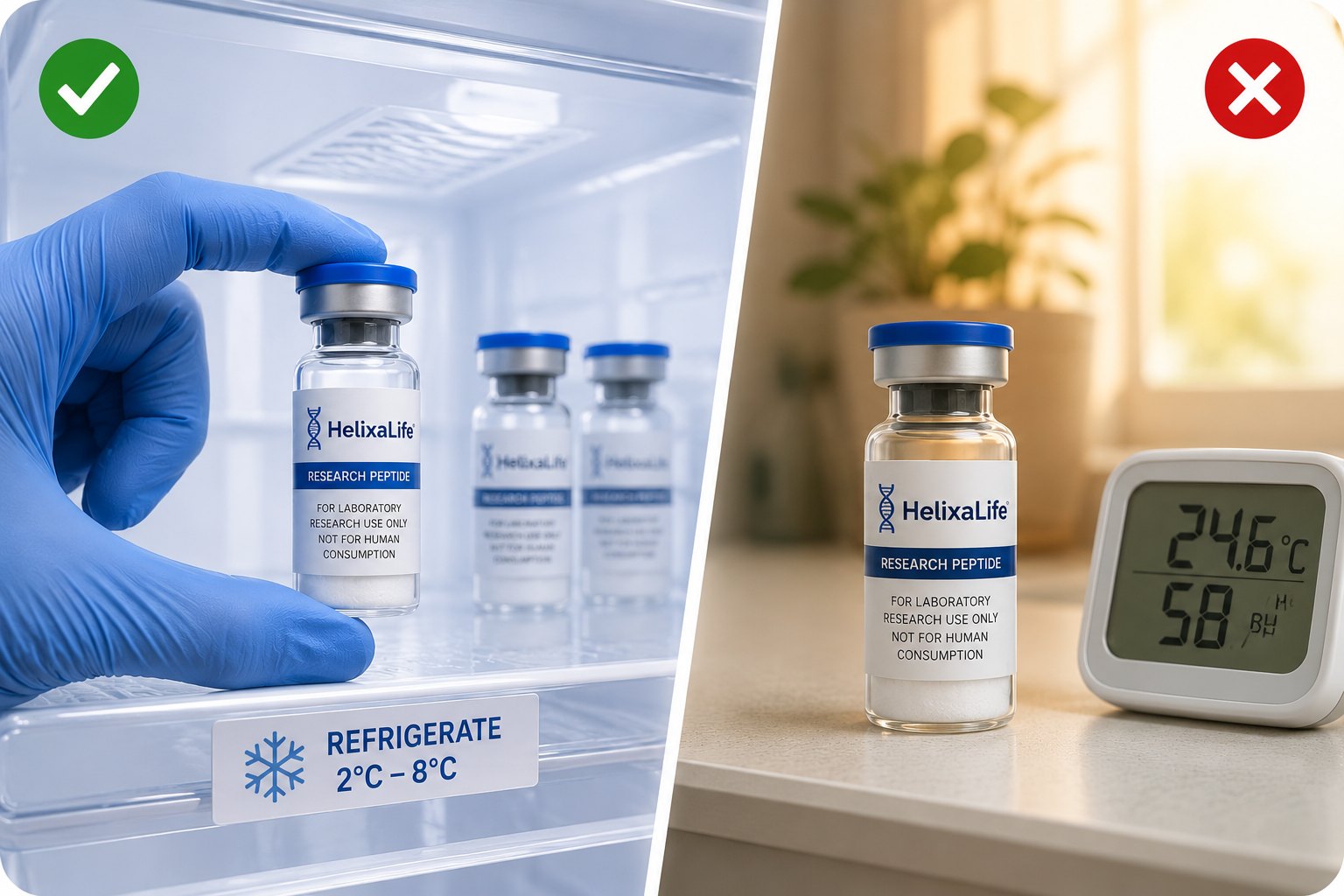
Store the product at the temperature shown on its label or documentation. Avoid unnecessary warming and cooling cycles.
Light
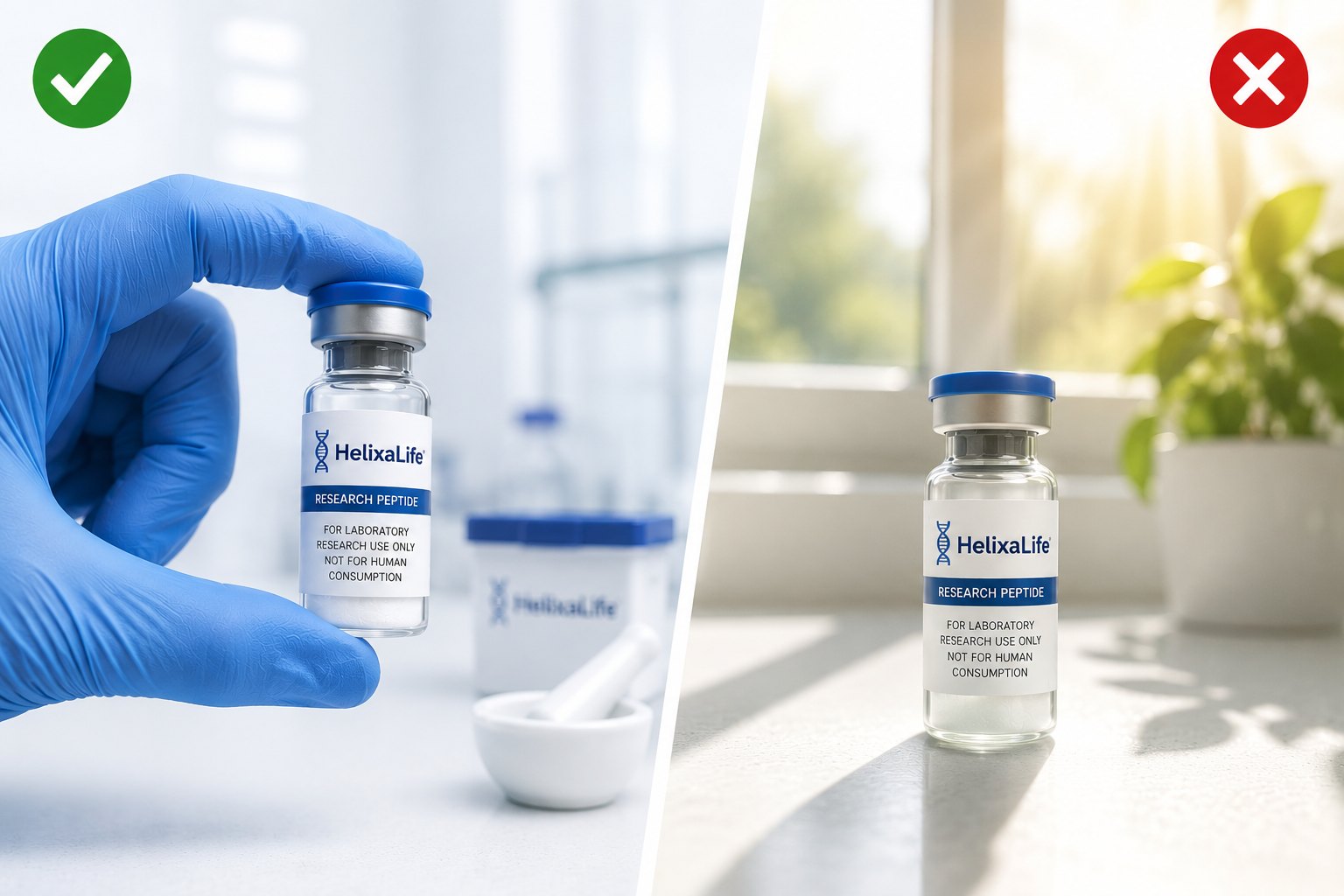
Keep research materials away from direct sunlight and intense artificial light. Retain the original packaging whenever practical.
Moisture
Keep unopened vials sealed and dry. Avoid humid environments and prevent condensation from entering the container.
Handling
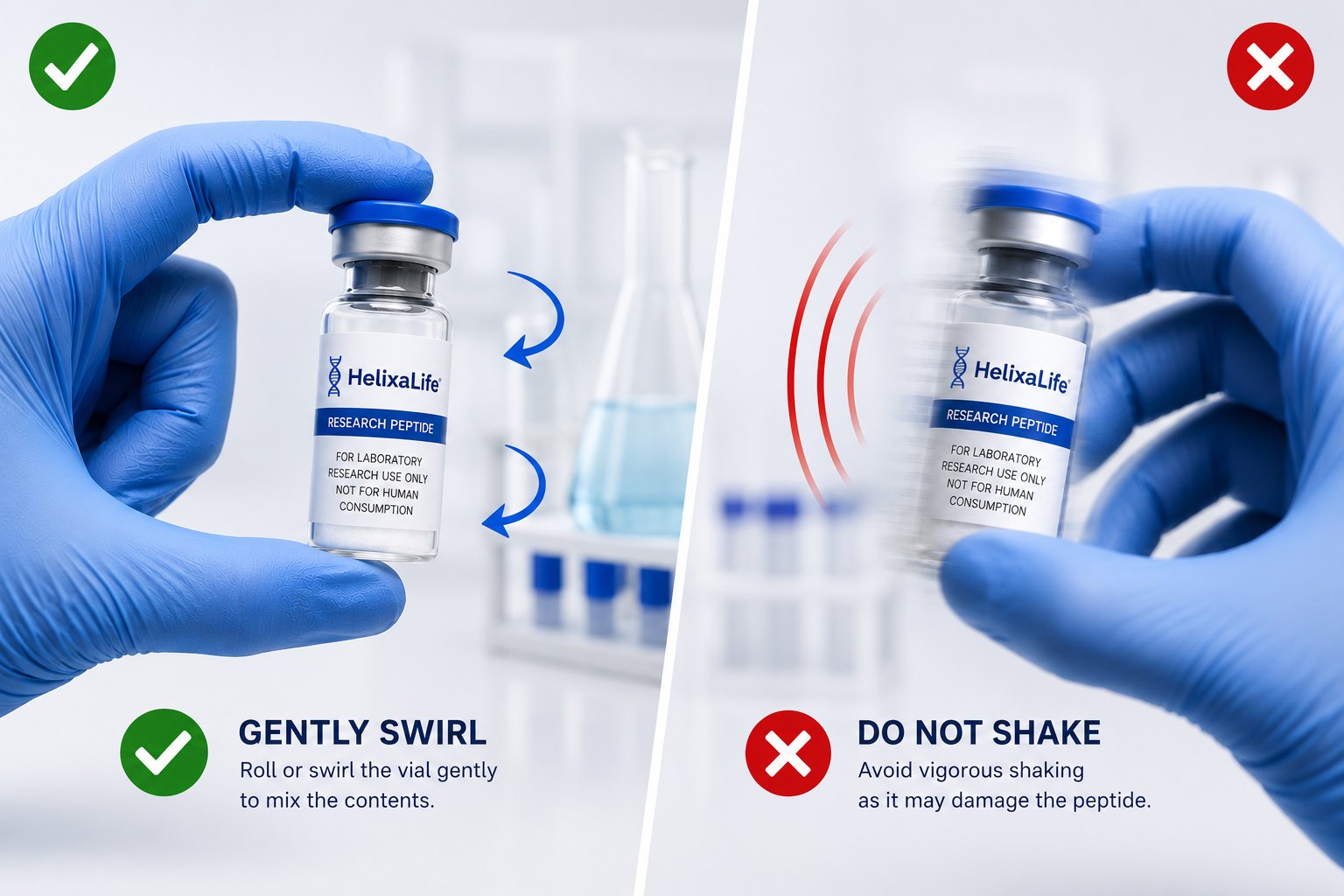
Handle vials carefully and avoid drops, forceful shaking, unnecessary agitation or repeated movement between storage environments.
UPON DELIVERY
Your Arrival Checklist
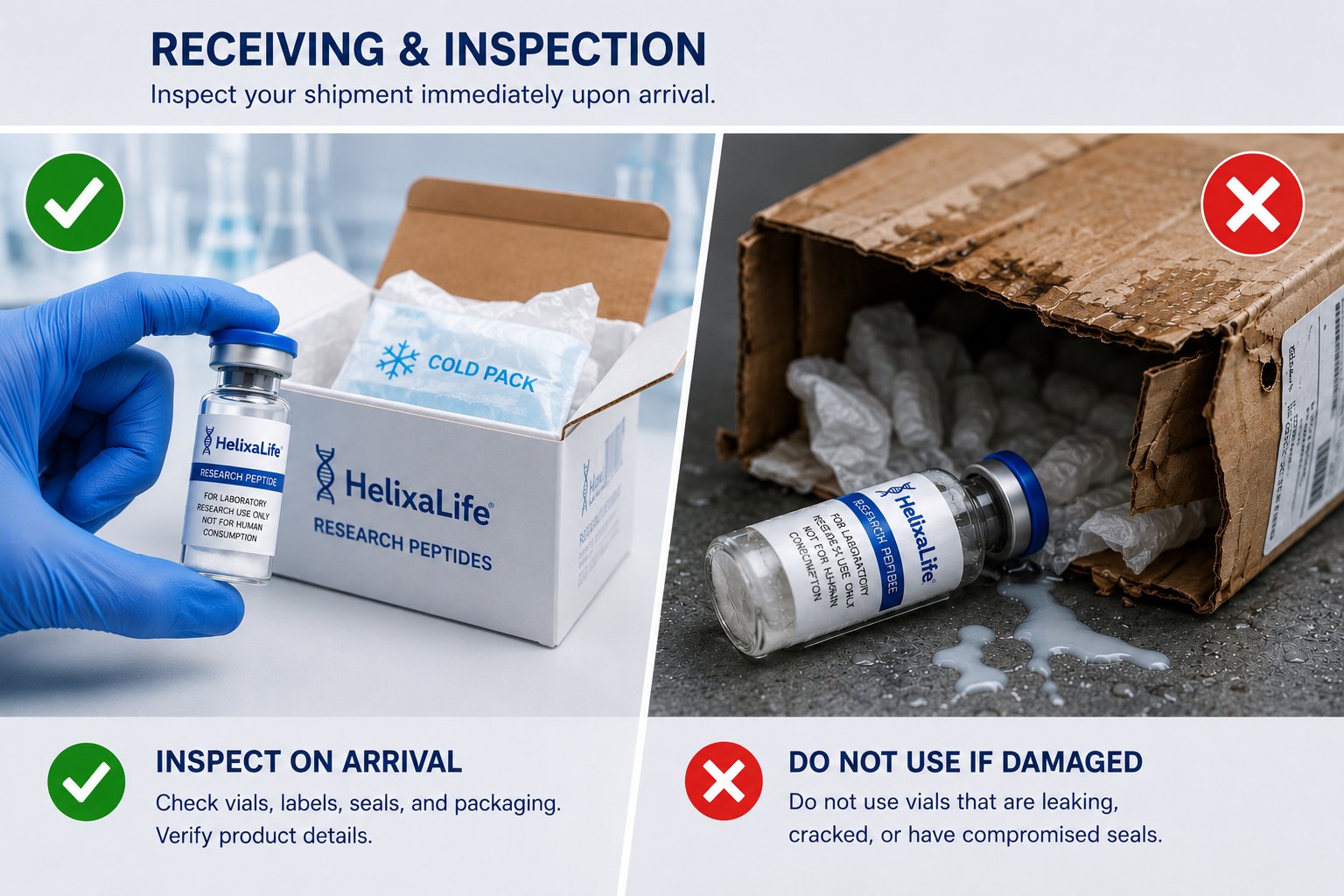
Complete a basic visual and documentation review before placing the material into storage.
✓
Inspect the outer packageLook for unusual crushing, punctures, moisture or visible damage.
✓
Confirm the productVerify the compound name, strength, information and quantity received.
✓
Examine the vialCheck that the vial and closure appear intact and properly sealed.
✓
Scan and verifyUse the QR code or verification page to review available documentation.
✓
Store promptlyPlace the material into its documented storage environment without unnecessary delay.
STORAGE GUIDANCE
Create a Stable Storage Environment
Consistency matters. Select an appropriate storage location and minimize unnecessary environmental changes.
Follow the stated temperature
Read the product label and supporting documentation before storage. Do not assume that every research material has identical requirements.
Limit temperature cycling
Repeated movement between cold and warm environments may introduce condensation and additional material stress.
Retain original packaging
Original packaging helps organize the product and may provide additional protection from light and physical contact.
A note about refrigeration and freezing
Some products are labeled for refrigerated storage, while other lyophilized research peptides may have colder long-term storage recommendations. Use the conditions shown on the individual product label or documentation rather than applying one temperature rule to the entire catalog.
SIMPLE BEST PRACTICES
Do This, Avoid That
Recommended
✓Read the product label before placing the vial into storage.
✓Keep the container sealed until required for laboratory work.
✓Use a clean, dry and organized storage environment.
✓Keep batch and analytical documentation accessible.
✓Record storage changes according to your laboratory procedures.
Avoid
×Leaving the product in direct sunlight or near a window.
×Storing it inside a parked vehicle or near a heat source.
×Forceful shaking, dropping or unnecessary agitation.
×Opening the vial merely to inspect the contents.
×Using damaged, unverified or improperly documented material.
TRANSPORTATION
Understanding the Shipping Journey
Packages can experience temporary environmental changes while moving through the carrier network.
01 · PACKED
Product protection
Materials are packaged to reduce physical movement and exposure during normal transit.
02 · TRANSIT
Temporary fluctuation
Short-term temperature changes may occur during transportation and do not automatically establish product failure.
03 · RECEIVED
Inspect and document
Review the package and vial, then document any unusual condition before opening or handling.
04 · STORED
Prompt placement
Move the product to its label-directed storage environment after the delivery review.
Concerned about a shipment?
Photograph the shipping container, packaging, vial and label before changing the condition of the product. Contact HelixaLife support with the order number and images for review.
LABORATORY HANDLING
Before Beginning Research
1
Confirm the compound, strength, lot and supporting documentation.
2
Review product-specific storage and laboratory handling information.
3
Prepare a clean and organized research workspace.
4
Inspect the vial and closure before opening.
5
Document the material according to your laboratory procedures.
GENTLE HANDLING
Minimize Unnecessary Agitation
Avoid forceful shaking, impact and repeated handling. When movement is required for an established laboratory protocol, use only the method described by the applicable product documentation or validated procedure.
Why gentle handling matters
Peptide stability is material-specific. Reducing unnecessary physical and environmental stress is a practical general safeguard.
VISUAL REVIEW
Know When to Pause
A visual inspection does not replace analytical testing, but unusual conditions should be documented and reviewed.
Expected condition
Container and closure appear intact, label is legible and product matches the order documentation.
Document first
Photograph unusual packaging, vial appearance, moisture, residue or closure conditions before handling further.
Pause and contact support
Do not proceed with visibly cracked, leaking, open, mislabeled or otherwise compromised material.
Not necessarily. Follow the storage condition printed on the individual label or provided in its documentation. Product-specific guidance takes priority.
Avoid forceful shaking or unnecessary agitation. Any laboratory manipulation should follow product-specific documentation and an established research protocol.
A temporary temperature change during transit does not by itself determine product condition. Inspect the package and vial, document the arrival condition and contact support when anything appears unusual.
Repeated movement between environments may create condensation and additional material stress. A consistent documented storage condition is preferable.
Scan the QR code associated with the product or visit the HelixaLife verification page to review available batch and analytical information.
QUALITY · TRANSPARENCY · VERIFICATION
HelixaLife Research Standards
Professional packaging, clear product identification and verification-supported documentation designed to help research customers receive, inspect and store materials responsibly.
This guide provides general educational information concerning the storage, inspection and laboratory handling of research products. It does not replace product-specific documentation, validated laboratory procedures or professional scientific judgment.
HelixaLife products are sold exclusively for laboratory and research applications. They are not intended for human consumption, medical use, diagnosis, treatment, therapeutic use or veterinary use.